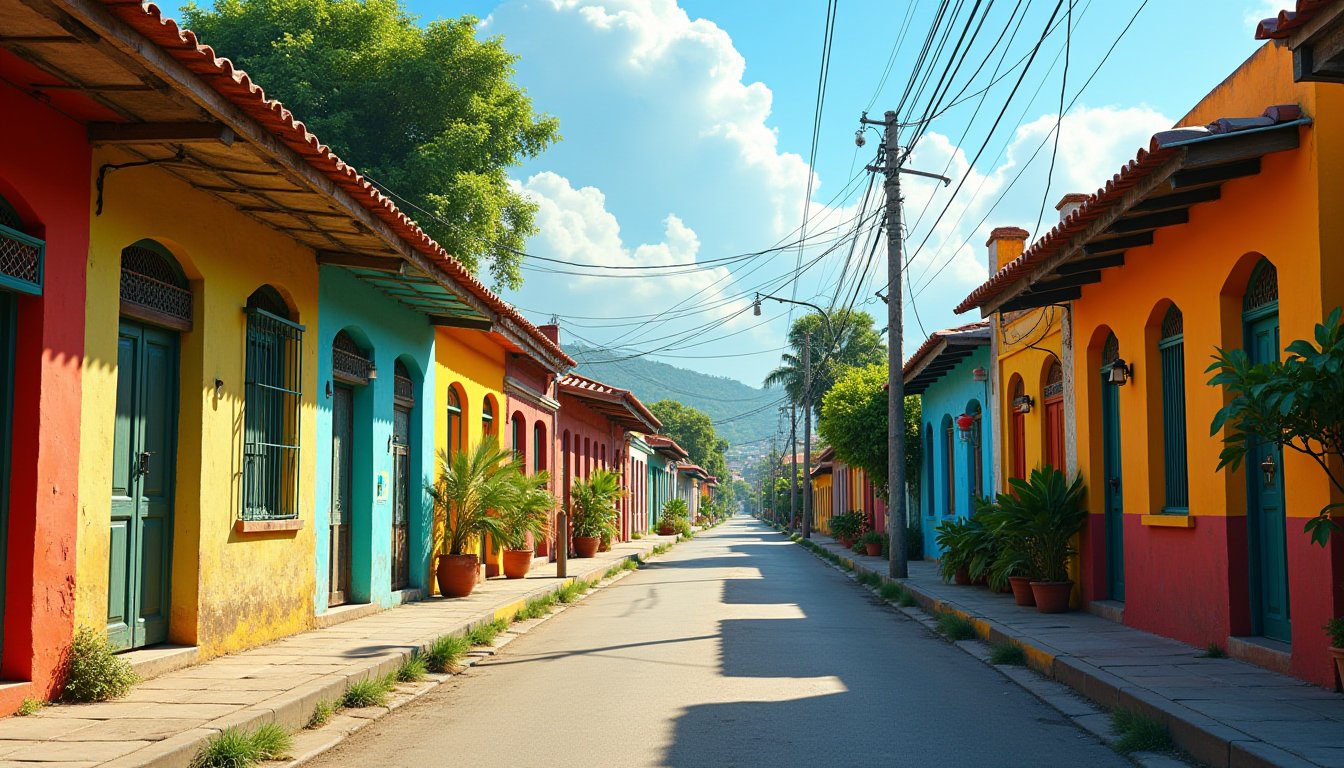
"Why a Teeth Cleaning Costs $30 in Barranquilla and $280 in Fort Myers"

Why a Teeth Cleaning Costs $30 in Barranquilla and $280 in Fort Myers
My teeth did not know they were in Colombia.
BARRANQUILLA, COLOMBIA
The hygienist snapped on her gloves the same way they do in Fort Myers. She adjusted the light over my face the same way. She scraped, polished, rinsed, told me I should floss more — the same way. The whole appointment ran about forty minutes. Perfectly competent. Completely unremarkable.
Then she handed me the bill.
Thirty dollars.
I sat there in the chair for a moment longer than necessary, doing the math I already knew. Back home in Fort Myers, a cleaning runs $250 to $300. I had just received the identical service — the same scraping, the same polish, the same mild guilt about my flossing habits — for the price of a decent lunch on Cleveland Avenue.
That was the moment something shifted. Not a small shift. The kind of shift where you realize a belief you held without ever examining it — American healthcare is just expensive, that's the cost of quality — was never really a belief at all. It was a story. A very profitable story. And someone else was collecting the profit.
The System Is Not Broken. It Is Working Exactly As Designed.
Here is the question worth sitting with: why does a cleaning cost $250 in Fort Myers and thirty dollars in Barranquilla?
The lazy answer is quality. The lazy answer is always quality. You get what you pay for. You don't want some back-alley dentist in Colombia poking around in your mouth. That's the story the system needs you to believe, because the moment you stop believing it, the math stops working in the system's favor.
But the quality was identical. I have been in enough dental chairs across enough countries at this point to say that without hedging. The equipment, the technique, the clinical outcome — identical. My teeth did not know they were in Colombia. They just got clean.
So if it isn't quality, what is it?
I've come to think of it this way; the U.S. Dental system is a liability dressed up as a necessity. Not your liability. Not your dentist's liability. A systemic liability, engineered at the infrastructure level, that extracts maximum revenue from every single interaction and then passes the bill to you with a smile and a reminder to schedule your next appointment.
The mechanism is not secret. It is overhead — the lease on the office, the staff, the equipment financing. It is insurance billing, which is its own baroque theater of negotiation that somehow always ends with you paying more than you expected. It is a network of gatekeepers — insurance companies, dental associations, equipment manufacturers, real estate — and we can't forget the lawyers - each taking their margin, each adding their layer, each ensuring that your local dentist, through no fault of their own, has to charge $280 for forty minutes of work just to keep the lights on. And he discovers that even at $280 he's busy, so the market will bear it.
The dentist is not the cartel. The dentist is also trapped inside it.
The Colombian dentist in Barranquilla is not. Her overhead is lower. Her equipment costs less. She has no insurance billing department, because there is no insurance billing. She sees you, she cleans your teeth, you pay her thirty dollars, you both go about your day. The transaction is clean in every sense of the word.
That is not a developing-world problem. That is a developing-world advantage.
The Audit
It became a thing for me. Not a hobby, exactly — more like the kind of systematic data collection that happens when you are an options trader living across Latin America and you cannot help treating every transaction as a spread to be analyzed.
I started keeping a running log. My own informal arbitrage scorecard across Colombia and Panama.
The lowest score: $20. Piedecuesta — a town tucked into the Eastern Cordillera of the Colombian Andes, at an elevation that keeps the weather permanently warm without ever tipping into hot. Not on any tourist itinerary. A lovely, quiet place where most travelers never go and most Colombians have barely heard of. The office was smaller than what you are used to in the States — almost all medical offices in Latin America are, and I will come back to why that matters — but the hygienist was competent, the instruments were sterile, and my teeth left cleaner than they arrived. Twenty dollars.
I did not lead with Piedecuesta because you are probably not passing through next Tuesday though.
The rest of the scorecard:
- $25 in San Juan de Urabá — a place so far off the beaten path that most Colombians you meet will give you a slightly puzzled look when you mention it.
- $30 in Barranquilla — the one that started all of this.
- $50 in Cartagena — still a fraction of Fort Myers, even in the city the tourists actually visit.
- $100 in Panama City — Panama, the country, not the place in Florida, a distinction worth making because the two have almost nothing in common except the name.
Panama City is the outlier for a reason. Panama's historical relationship with the United States — the canal, the dollar, the decades of American infrastructure and American corporate presence — means that prices there feel closer to what you know. The dental offices reflect this. Better-equipped than their Colombian counterparts. In-house X-ray machines, which is actually a meaningful distinction. But that's Panama City. If you want prices more like Colombia, the rest of Panama such as David will be.
Here is the tactical detail that explains the entire Colombian pricing model, and it is the kind of thing you would never learn from a travel blog: dentists in Colombia typically do not own radiology equipment. Dedicated radiology centers do. So if your Colombian dentist needs an X-ray, they write you a prescription, you walk or Uber a few blocks to the radiology center, they take the film, you go back to the dentist in the next day or two. The dentist reads the results. Done.
This is not a workaround. This is a deliberate structural choice that keeps overhead low by distributing capital costs across specialized facilities rather than embedding them in every individual practice. Your dentist is not financing a $200,000 imaging suite and then quietly recovering that investment through your bill. Someone else owns the machine. Someone else finances it. Your dentist pays for the service when needed, and passes none of the capital cost to you. I've seldom paid more than $30 for dental tomography in Colombia, by the way.
The result is that a Colombian dental office is smaller than what you are used to, simpler than what you are used to, and about one-tenth the price of what you are used to. The cleaning is the same.
The Move Nobody Talks About
Here is where I want to be precise, because imprecision on this point leads people to miss the actual opportunity.
I am not telling you to book a flight to Colombia for a teeth cleaning.
That is not the move.
The move is this: if you are already there — traveling, exploring, thinking seriously about what it would look like to live differently, to stop trading sixty-hour weeks for a retirement that keeps getting pushed further toward the horizon — then walking past a dental office and not walking in would be the financial equivalent of leaving cash on the sidewalk.
Once you are on the ground in Latin America, the medical care is not a bonus feature of the trip. It is a financial instrument embedded in the trip — one that pays dividends in the form of hundreds of dollars you did not spend, on care that is clinically equivalent to what you would have received at home. The only difference is the number on the bill and the absence of the insurance pre-authorization phone call that would have taken forty-five minutes and resolved nothing.
I was not planning some grand medical tourism pilgrimage when I walked into that office in Barranquilla. That phrase — medical tourism — is a label designed, perhaps not intentionally but effectively, to make the thing sound more complicated than it is. It implies a special trip, a special category of traveler, a special level of planning. It implies that what you are doing is unusual.
It is not unusual. It is just geo-arbitrage. You are in a place. The place has dentists. The dentists are competent. The bill is thirty dollars. And yes, the dollar has weakened a lot against the peso in the past year or two, but raise any of these prices by 10-20% mentally if you like and see if that materially changes the story. I doubt it will.
The unusual thing — the thing that deserves examination — is the assumption that paying $280 in Fort Myers is normal.
What Changes After
The cleaning itself fades. Forty minutes in a chair is forty minutes in a chair, and the novelty of paying thirty dollars for it wears off faster than you might expect.
What does not wear off is the recalibration.
You stop assuming the U.S. system is the only option. You start asking the question automatically — what does this cost here? — before you assume you already know the answer. You start noticing the architecture of the pricing, the layers of overhead and billing and gatekeeping that sit between the service and what you pay for it. You start seeing the liability for what it is.
My dentist in Fort Myers is a good dentist. I am not writing a complaint about him at all - he's great. The problem is the infrastructure he operates inside — the lease, the equipment, the insurance billing department, the entire apparatus that ensures a forty-minute cleaning cannot be delivered for less than $250 without someone taking a loss.
Next time you are thinking about a trip to Latin America, book a dental appointment while you are there. Not as the point of the trip. As a small, rational, completely unremarkable act of geographic arbitrage that happens to save you $220 and takes forty minutes.
You might be surprised how normal it feels.
And how long it takes you to stop being surprised by the bill.����������������������������������������