"Panama City to David Train: A Multibillion-Dollar Pipeline or Pipe Dream?"
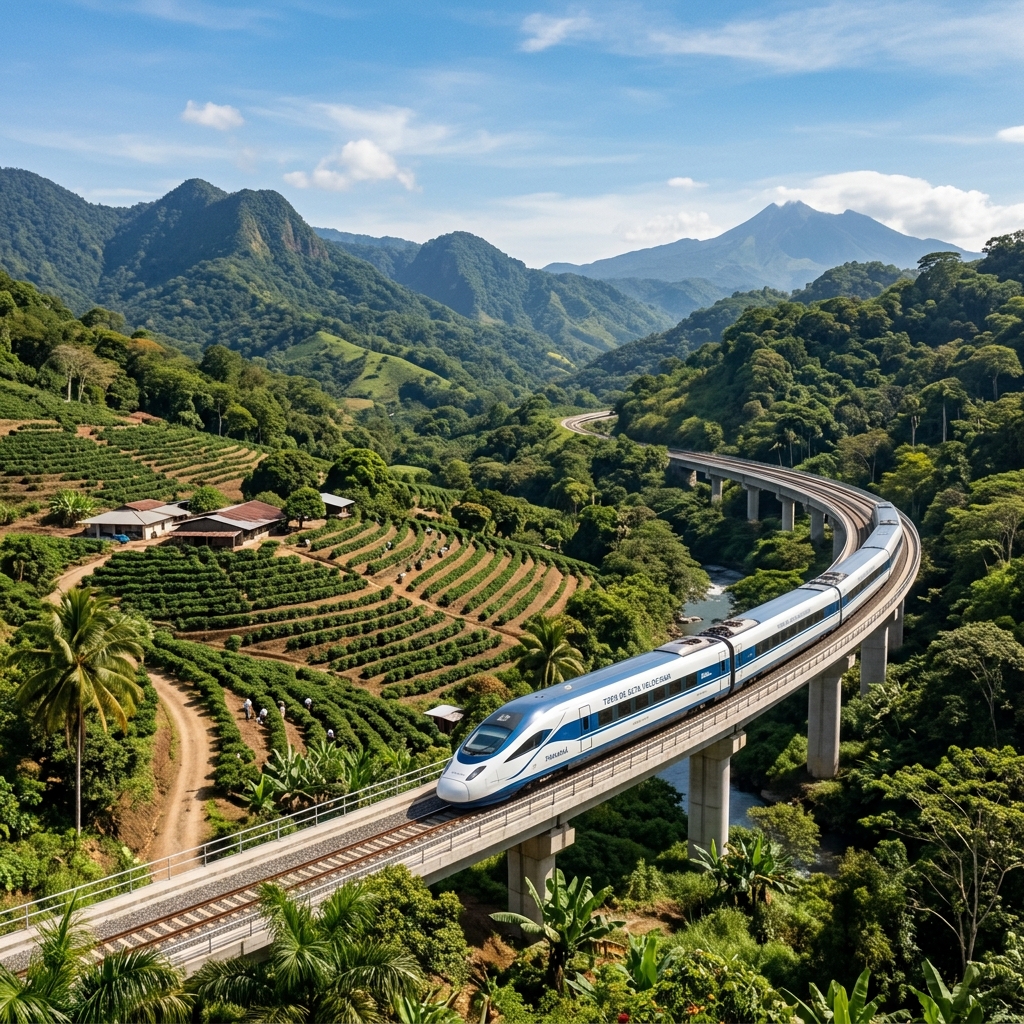
Large-scale infrastructure projects, while often representing significant liabilities for the state, simultaneously create immense private access arbitrage for those who read the underlying system. Panama's proposed high-speed train, connecting Panama City to David, offers a potent illustration. The current six-to-eight-hour drive between these two points acts as a defining "price filter," effectively preserving the value of premium mountain living in Chiriquí. This isn't merely a transport upgrade; it's a fundamental re-ordering of access, poised to transform the entire real estate and lifestyle map. The same project that is a long-term liability to the state balance sheet can be an immediate, outsized asset to those positioned to leverage its existence.
Chiriquí, a region celebrated for its spring-like weather, abundant fresh produce, and sought-after mountain towns like Boquete and Volcán, currently remains a remote paradise. Its undeniable appeal is tempered by the arduous journey from the capital, a systemic vulnerability. The Inter-American Highway, the primary terrestrial link, demands six to eight hours of driving—a significant time cost that limits its accessibility for casual visits, weekend escapes, or even regular business. This substantial time barrier effectively keeps the market for Chiriquí real estate and lifestyle options at a suppressed valuation, acting as a natural brake on demand and a filter for who can practically enjoy its benefits.
President José Raúl Mulino's administration envisions a roughly 390-kilometer rail link, estimated between $5 billion and $7 billion, that would dramatically slash this transit time to a mere 2.5 hours. A passenger train zipping along at up to 160 km/h transforms the geography. Flight options exist between David and the capital, but the recurring cost keeps it a premium luxury. A rail connection changes the math entirely. While Boquete real estate is already priced for expats, David and surrounding agricultural towns remain undervalued. The window to buy the optionality is while the travel friction is still high. Once the connection is seamless, the arbitrage is gone.